

One of the things we settle for in life, and particularly in marriage, is the mundane. We accept the passionless. We have responsibilities, we are tired, there is always something that needs doing, and gradually we begin to think that this is simply what life becomes.
But I want much more than that. I want to create, to build, to discover what I am capable of. I want strength and health, wealth and freedom, and the time to enjoy what all of these things make possible. And I want a marriage full of affection, laughter and desire, with someone whose company I look forward to, someone with whom the life itself becomes more beautiful.
I believe these ambitions belong together. The person you love deserves the part of you that still believes magnificent things are possible.
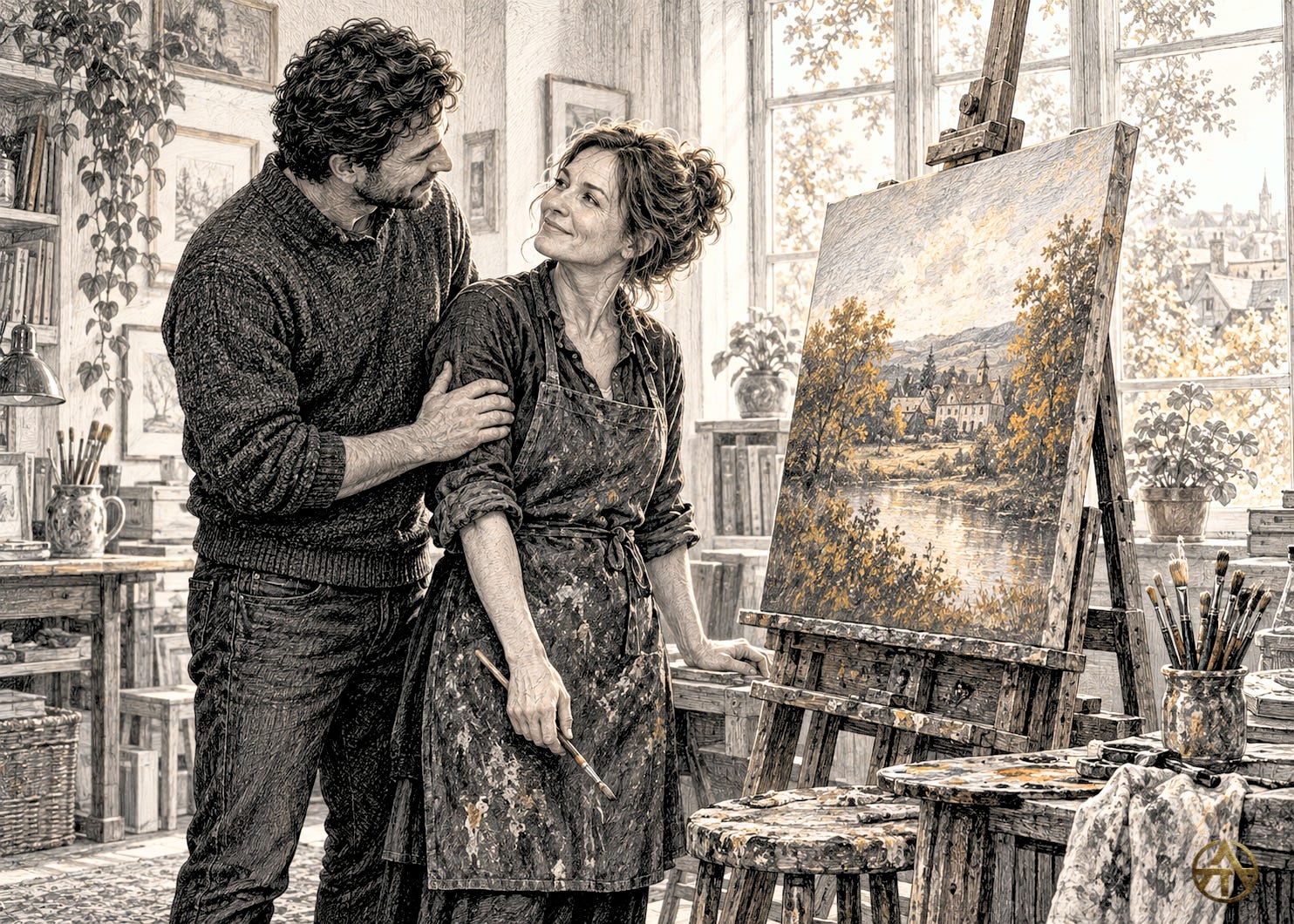
Think about someone who has become very good at creating a business. It mattered to them. They had a burning desire for something, and because it mattered, they kept looking for solutions. They tried things that did not work. They tried again. They learned, changed and continued because the thing they were pursuing was valuable to them.
What I would add is that we need to apply what we know across the whole of life. We need to express our creative potential in our health, in our work, in the creation of wealth, and in our relationships. Too often, we keep a valuable lesson inside the one part of life where we learned it and prevent all the others from benefiting.
Everything important to you is worth the time, the passion, the creativity, the effort and the persistence to pursue it. Including the love between you and the person beside you.
Give love the possibility of becoming extraordinary
When something is difficult in your work, you can look for what you have yet to understand. You can ask a better question, learn a skill, change your approach. A difficult beginning can become part of the story of something you are proud to have built. Bring that possibility home, where there is so much worth developing.
There are things that can change. There are things you can improve. There are things you can do differently. You try, you discover where you missed the mark, you learn and you try again. The passion to create a wonderful relationship gives you a reason to continue learning the person, and yourself, long after the first excitement of being together.
And if you have done the best you currently know how to do, there is still the possibility of becoming more capable. You can develop yourself. You can learn to hear something uncomfortable without immediately defending yourself, discover why a gesture that feels generous to you leaves your spouse untouched, or give up a habit you have been explaining away for years. Your present ability does not have to be the limit of how good this can become.
And you can also discover new pleasures together. A place you both want to visit. A shared interest neither of you expected. The delight of seeing someone you know so well become capable of something new. There is an enormous difference between knowing a person's familiar habits and believing there is nothing left to discover in them. Your spouse is still becoming, just as you are, and you can take pleasure in helping each other grow.
Two pieces of wood
Saint Paisios used an image from his work as a carpenter to explain how a marriage can grow.
As Athanasios Rakovalis records it, he would shape two pieces of wood until they fitted naturally together. Once they fitted well, a small nail was enough. Forcing poorly fitting pieces into place with nails left pressure in the wood that could eventually pull them apart.
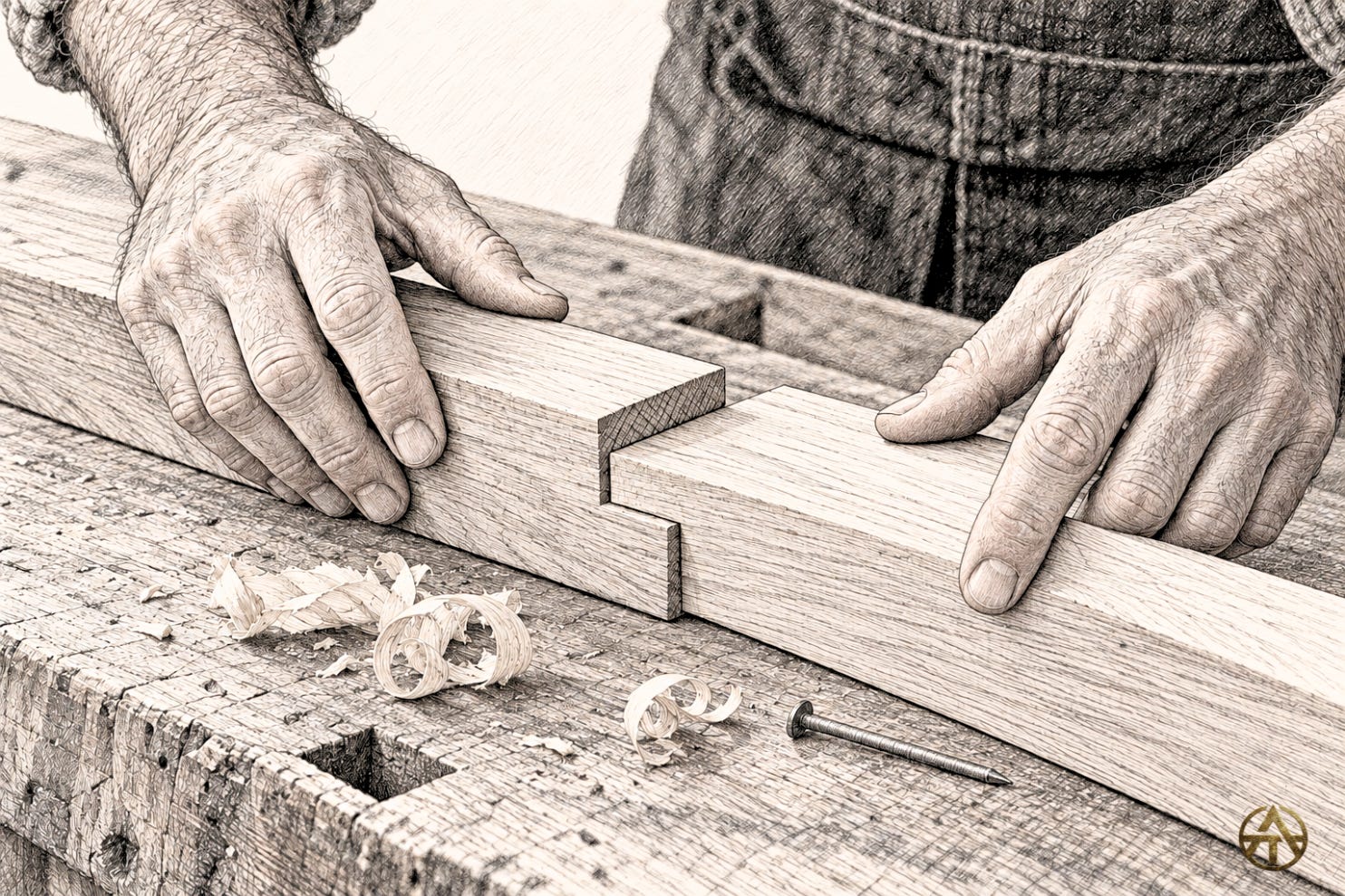
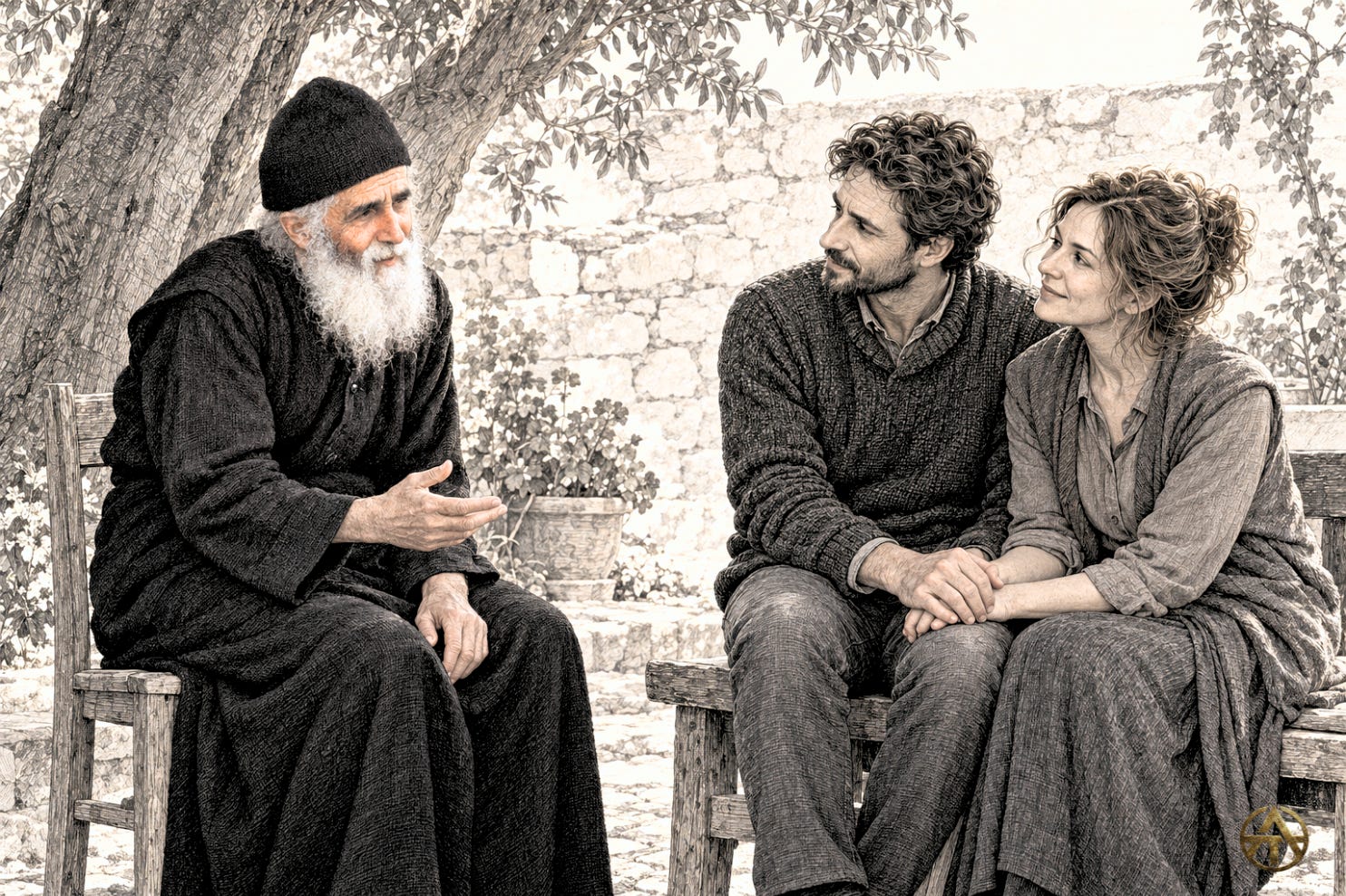
He was speaking about a spiritual father helping both spouses, seeing where each needed work. He described couples who had seemed well matched but separated, and others who had initially seemed ill matched and went on to do well with that guidance.1
What moves me in this image is the possibility of becoming. Two people do not have to arrive finished. They can grow into a closeness that neither could have created by remaining exactly as they were.
And notice that both pieces are worked on. It is very easy to hear this story and immediately see the parts of your spouse that need changing. The more useful beginning is to ask what love is asking you to change.
Perhaps your directness has become harshness. Perhaps your wish for peace has become a refusal to say what matters. Perhaps you have become so attached to being right that the person you love has stopped trying to tell you how they feel.
There is real work here. But there is also a beautiful possibility: that the very places where you have struggled to meet can become places where you learn to understand one another profoundly.
Learn how your love reaches the other person
I often return to Gary Chapman's The Five Love Languages because it draws attention to something easy to miss: people can express love sincerely and still fail to communicate it in a way the other person recognises. Words, time together, gifts, practical help and touch offer different ways of paying attention to that question.2
Consider a husband who works hard because he wants his wife to feel secure. Providing is an expression of his love. Yet she may also long for him to sit beside her and be interested in what she has to say. He keeps giving more of the thing he understands, while the thing she is asking for remains missing.
Or consider someone who offers help when their spouse wants encouragement, or advice when they want to be heard. There may be love in the intention and still something important to learn in the response.
Ask your spouse what you do that makes them feel deeply loved. Ask what they miss. Be interested in the answer, especially when it is different from the answer you expected.
John Gottman and Nan Silver's The Seven Principles for Making Marriage Work gives this attention a practical form. Knowing your partner's inner world, nurturing admiration, responding when they reach for you and creating shared meaning all make the relationship something you participate in continually.3
An ordinary moment can become an opening. Your spouse tells you about something that excited them. You can let it pass while you continue looking at your phone, or you can enter their world for a little while. Ask what happened. Let their excitement matter to you. There is pleasure in being known like that, and pleasure in giving someone that experience.
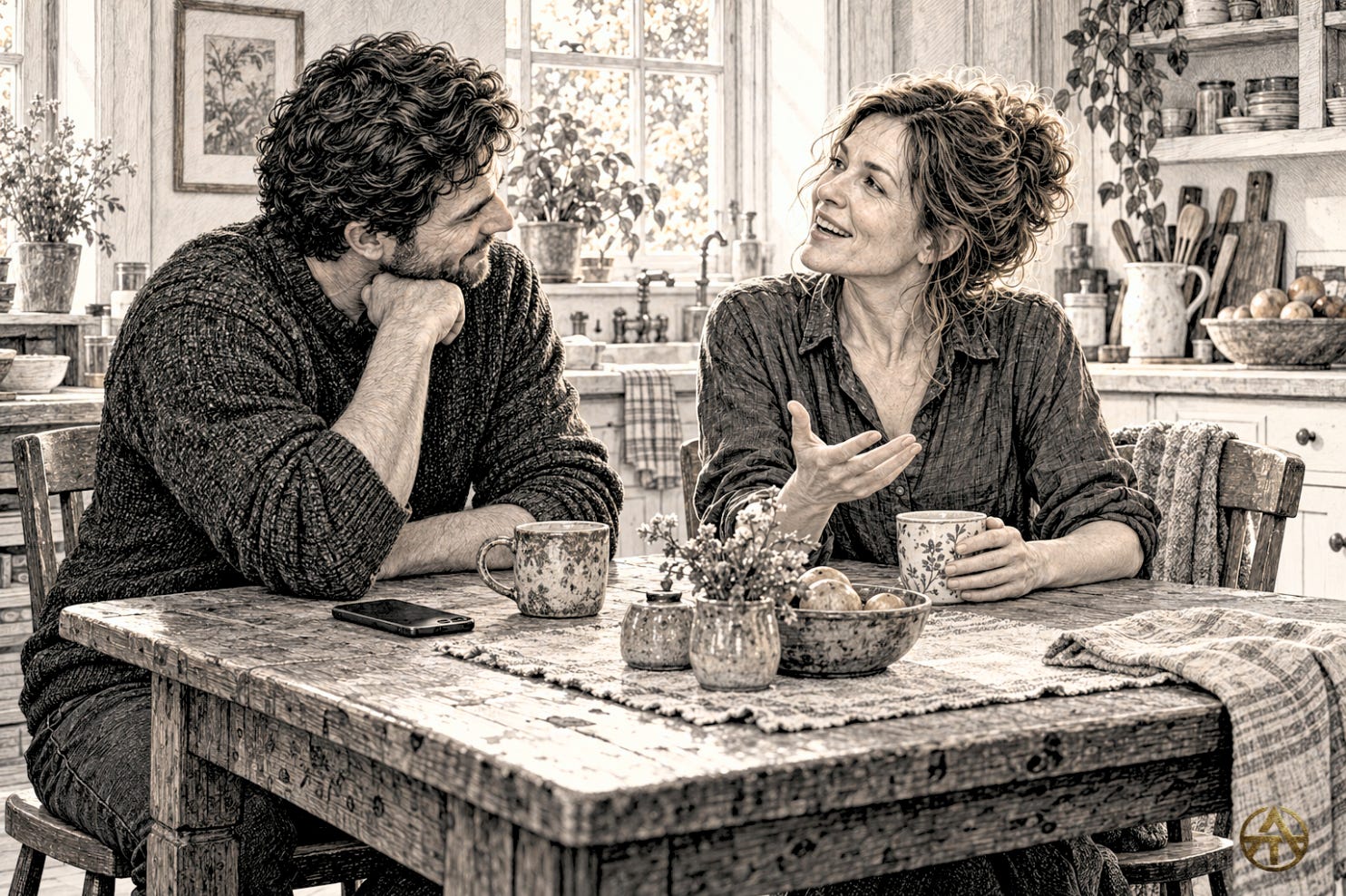
The years together should give you more ways to love the person as you continue learning what matters to them.
The kind of love worth growing into
For me, this reaches much deeper than technique.
I have thought a great deal about what remains when we take away the things we so often confuse with love: the wish to possess, the need to be admired, the desire to have someone meet our needs. There is something beyond all of that. A love that cares for the person themselves, whose good matters to us even when it asks something of us. That is the love I want to grow into, and it asks me to keep developing the person I am.
In the New Testament, Saint Paul begins his description with words we have heard so often that we can pass over what they ask of us: “Love is patient, love is kind.” The passage goes on to speak of humility, truth and perseverance. Earlier in the same chapter, even knowledge, great faith and extraordinary giving are placed under the necessity of love.4
Read that with your own conduct in mind. How do you speak when you are tired? What happens when you are disappointed? Can the person you love bring you a concern without having to prepare for your reaction?
In Orthodoxy, sacrifice belongs at the heart of love. Saint John Chrysostom, reflecting on a husband's love for his wife, speaks of care modelled on Christ's giving of Himself, and of affection and kindness in the relationship.5
Sometimes that sacrifice is great. Often it asks for something very close to us: our pride, our insistence on the last word, our convenience, the pleasure of keeping an old grievance alive. There can be tremendous freedom in giving these things up for the good of someone you love.
And there is joy in generosity. To know that your presence brings comfort. To see someone flourish and have played a part in it. To want their delight and find that it has become your delight too. A marriage can become one of the places where we most deeply experience what it means to be alive.
I believe our relationship with God gives this love its deepest direction. Prayer, humility and repentance ask us to look honestly at ourselves and remain willing to become better. The spiritual life enters the way we answer a question, carry a responsibility and return after we have hurt someone.
Let success enlarge the life you share
This is why I want wealth to serve love.
Money can do beautiful things. It can give a family security, make an opportunity possible, open the world to you and create time to be together. Building it can be an act of service. I have no interest in pretending that the lack of money is freedom, or that financial ambition is something to apologise for.
But we need to understand what we are doing with it. In life, it is people that we ought to love, and money that we should use. When we reverse that relationship, we lose sight of the very reason the work mattered.
So make the desired life specific enough to recognise. What do you both want to experience? What would you love to learn, to build, to see? What would make an ordinary evening together feel good? What would give each of you more room to become the person you long to be?
Let both people answer. Their hopes may surprise you. You might be imagining a bigger house while they are dreaming of time to study, a journey together, or the return of an affection that has become hurried. Those answers can change how you pursue the ambition and what its success is supposed to make possible.
You can help each other achieve things that matter. When you understand what your spouse is trying to build, you can give encouragement that speaks to the actual difficulty, take responsibility for something that frees them to work, or help them think through a decision. And they can do the same for you. The business, the qualification, the creative work can all benefit from that understanding. There is something wonderful about making progress and having someone beside you who knows why it matters, someone whose own progress you are just as glad to see.
Start with one of those answers now. Choose something you can give real attention to this week. An evening together that you both want. A conversation you have avoided. A practical burden you can take up willingly. An expression of affection that matters to the person receiving it.
Then notice what happens. Keep learning. Give the relationship the patience and imagination you would give anything you truly wanted to become wonderful.
You can reach for extraordinary achievement and reach just as deeply into love. Develop your strength, your mind, your work and your wealth. Let your soul govern what you do with them. Bring the fullness of the person you are becoming to the people whose lives you share.
They deserve to experience your greatness in the way you love them.
The paid companion, Make Your Marriage the Best Part of Your Life, turns this into a week you can begin together: discover what makes each of you feel loved, make room for affection and enjoyment, repair a point of friction, and give both people's ambitions a place in your shared life. It includes a complete worked example and a printable application. Become a paid subscriber to receive it.
Rakovalis, A. (1998) Ο πατήρ Παΐσιος μου είπε… [Father Paisios told me…]. Thessaloniki: Melissa. Passage reproduced in ‘Ο όσιος Παΐσιος για το γάμο και την οικογενειακή ζωή’, Pemptousia, 18 January 2015. Accessed 30 September 2026.
Chapman, G. (1992) The Five Love Languages: How to Express Heartfelt Commitment to Your Mate. Chicago: Northfield Publishing. See also the author's ‘What Are the 5 Love Languages?’. Accessed 30 September 2026.
Gottman, J.M. and Silver, N. (2015) The Seven Principles for Making Marriage Work. Revised edition. New York: Harmony. See also The Gottman Institute's ‘An Introduction to the Gottman Method of Relationship Therapy’. Accessed 30 September 2026.
The Holy Bible (2011) New International Version. Biblica. 1 Corinthians 13:1–13.
Chrysostom, J. (1889) ‘Homily XX on Ephesians’, in Schaff, P. (ed.) Nicene and Post-Nicene Fathers, First Series, vol. 13. Translated by Gross Alexander. Buffalo, NY: Christian Literature Publishing Co. Online text, New Advent, commentary on Ephesians 5:25–27. Accessed 30 September 2026.