

Rickson Gracie once taught the Hulk how to breathe.
You may remember the scene in The Incredible Hulk: Bruce Banner, trying to keep his anger under control, takes instruction from a man who knew a great deal about remaining composed under pressure. Rickson was a wonderful choice for that role1. I had watched him in Choke as a teenager, and the breathing he demonstrated was quite influential for me. It opened up a whole realm of possibility in my thinking about the body and what we can learn to do with it.
But there is somebody behind this who deserves a mention, and his contribution to Rickson's life was profound. Orlando Cani, a yoga teacher and physical educator, developed Bioginástica, bringing breathing, meditation and movement into the same practice. Rickson's search for further development after his 1980 fight with King Zulu eventually led him to Cani. He would later describe him as the most important guide in his life after his father, Hélio2.
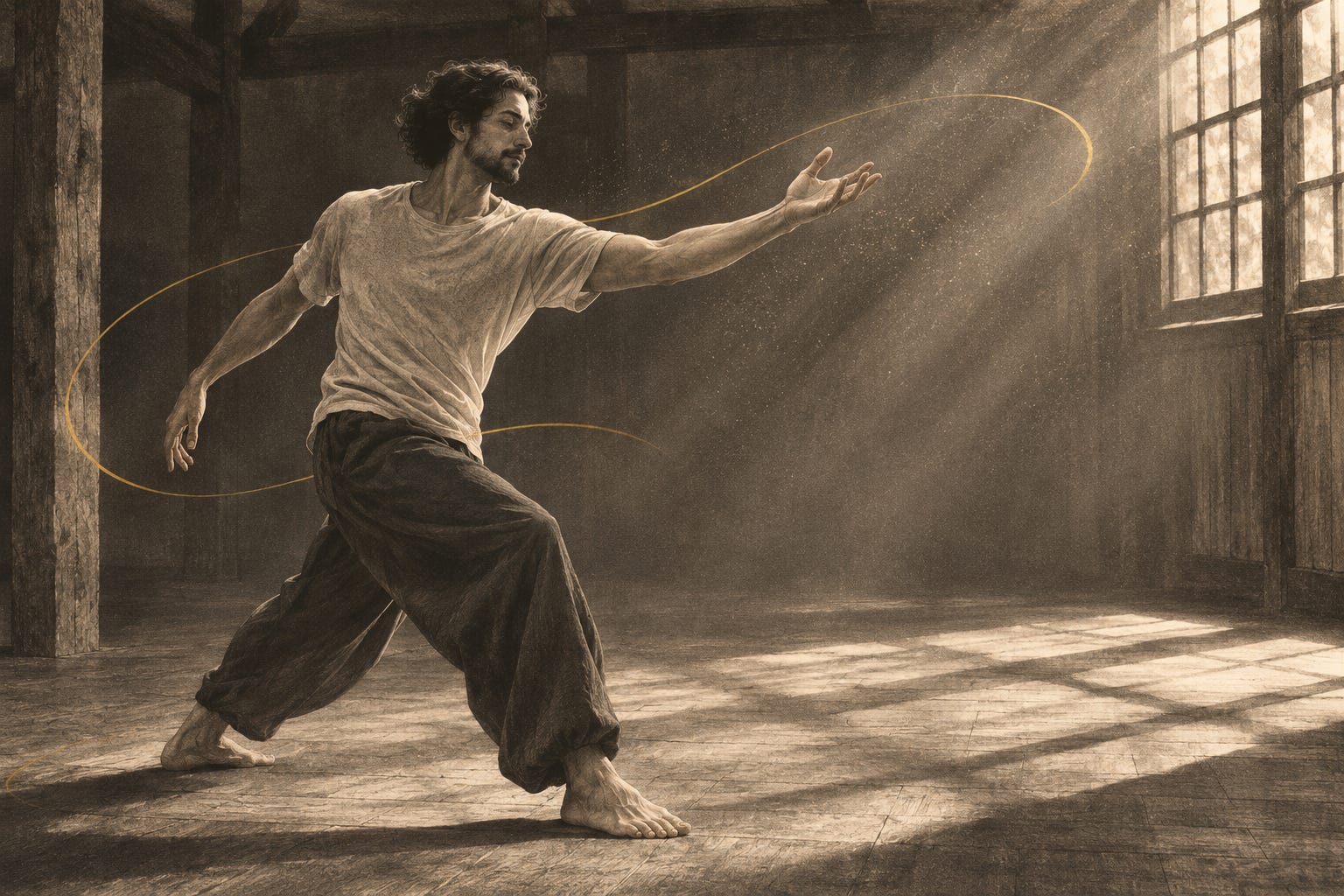
There is a great story about the two of them. Rickson had been training with Cani for almost three months, following the movements his teacher showed him. On one occasion Cani had to answer the telephone, and he asked Rickson to keep going. So here was Rickson, accustomed to following his teacher, suddenly having to find the movements for himself. He began to improvise.
When he opened his eyes, he was hanging from wooden bars on the wall, drenched in sweat. His teacher was there, very emotional about what he had witnessed. Rickson had been at it for an hour and fifteen minutes, and Cani had called him several times without any response. Rickson describes this as a meditative state. He had lost himself in the breathing and movement. Cani told him that he no longer thought Rickson needed him3.
For me, the privilege of having somebody who can guide us towards a discovery of this kind is priceless. Cani gave Rickson an experience which became part of the way he understood himself, and Rickson's gratitude towards him says a great deal. I also love the fact that Cani was willing to let him go. He recognised what had happened and was moved by it. There is something very beautiful about a teacher who can respond like that.
But I want to take this a little further. Rickson was doing something very physical, yet the experience he describes has to do with meditation, with presence, with losing his sense of time. Can we separate those things from the movements? Can we understand what he learned without considering what happened in his mind? These are the questions which make this such an interesting example for me.
Human beings are not separate in their physical, mental or spiritual capacities. So everything that we do must address all of them. Imagine you are about to set off on the greatest challenge of your life. You might be preparing for a demanding physical event, or you might be setting off on an entrepreneurial venture. One seems to require physical preparation, the other knowledge and mental preparation. But the resilience required in a physical challenge is also emotional and mental. And entrepreneurship requires you to tolerate the ambiguities and uncertainties of an unknown path, to make connections with people you do not yet know, to do things that feel uncomfortable. Still, the preparation can be common. We need routines to strengthen the body, and we need routines to strengthen the mind. All of this is intricately and intimately connected.
The yogic traditions take this discussion into realms which I find fascinating. We have the idea of vital energy, we have the sun and moon within the body, we have practices which are intended to awaken spiritual capacities. Sivananda describes these in The Science of Pranayama4. What strikes me is how much these teachings expect of us. They ask us to develop ourselves, to discover capacities through practice, and to consider what that development means spiritually. I want to keep that ambition in our discussion, because it is very much in line with how I think about human potential.
Consider, for a moment, the Tibetan story of Milarepa. A hermit in the Himalayas, enduring the cold through the cultivation of inner fire5. I want a place for this kind of story in our discussion, for the myth and the imagery, for the way it can set our imagination free. We can picture the mountains and the cold, and this man who has developed an ability which allows him to endure them. There is something magnificent in that.
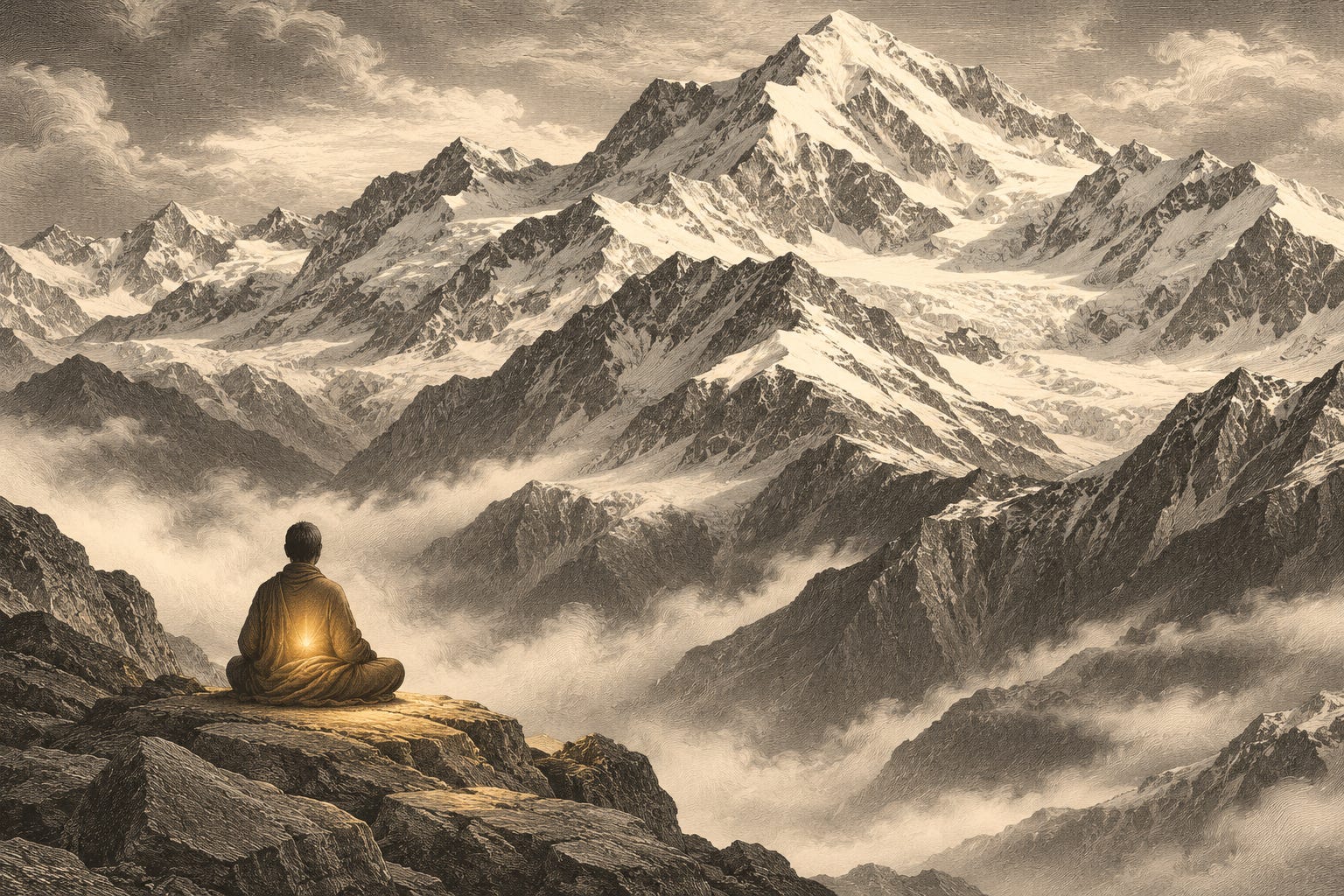
The part of tummo which I find particularly intriguing is the visualisation. There is forceful breathing, there is muscular work, but there is also an imagined fire involved. In the study by Kozhevnikov and her colleagues, temperatures measured under the arm reached 38.3°C. The heat was generated through the physical activity, and the visualisation helped sustain the increase6.
And here we come back to a point which I feel strongly about. When we talk about imagination, about visualisation, about what is happening in the mind, we are talking about things which belong in our understanding of the physical body. This is exactly why these practices interest me. We have an image, we have the breathing, we have the muscular activity, and all of these are involved in what is happening to the person.
For a much more everyday example, Yilmaz Balban and her colleagues had people practise breathing exercises or mindfulness meditation for five minutes a day, over a month. The breathing exercises gave greater improvements in mood and reductions in breathing rate, particularly exhalation-focused cyclic sighing7.
So there are things we can start doing in a few minutes, and there are practices which people devote years to understanding. I think that both deserve our attention. We begin with what is available to us, we learn as we go, and the next step becomes clearer through the experience of taking the first one.
I always tell people to practise these things repeatedly, because life does not work in segments. Everybody likes to talk about separating the parts of life, but we are not separate beings. Of course we can change our focus and get into the zone in specific circumstances. But when we face day-to-day difficulties, we also have an opportunity to practise. If our mind strays, we can bring it back to full awareness of what we are doing. If we find ourselves speaking negatively to ourselves, we can correct it in that moment. And during training we can practise these things over and over again, building the experience which will allow us to use them when we go out into the rest of our lives.
And this brings us back to our relationships as well. You want to connect with somebody, to understand them, but your mind is occupied with what you are going to say next. So how are you going to understand what they are saying? And this is an important thing, because our relationships are among the most important contributors to the life we experience. If we want meaningful relationships, then we have to become willing to give the other person our attention, to hear what they are saying and allow ourselves to understand it. The ability to become fully engaged has a place in that relationship. Rickson gave his attention to his movement. In a conversation, we can learn to give that attention to the person in front of us.
But all of this, of course, needs to consider where it is going. We can develop abilities, increase our capacity, become more skilful in the things we do. And then we have to decide what we will do with that development. What do we want it to serve?
The spiritual connection for me is one of the most profound in relation to why. Life itself has a purpose, and nothing connects it more to that purpose than our mortality. I love the Orthodox perspective that we cannot take our physical possessions with us, but everything we give in terms of service, in helping others, in leaving the world better, we take with us in spiritual terms8.
There is a great poetic truth to it. The spirit is immortal. In my understanding, the transition from this life to the next is like walking through a door. This changes the way we think about life and the way we conduct ourselves in it. It carries a powerful thread through everything we do, including how we direct our improved powers, our improved understanding, our improved ability to learn and to act. The more quickly we become aware of that responsibility, the more thoughtfully we can live.
In Orthodox contemplative practice, breathing can accompany the prayer of the heart. The purpose is union with God, and the tradition speaks of divine light and joy in the soul, of the remembrance of God becoming continual throughout a person's life9. I find this magnificent. The body has a place in prayer, and prayer has a place throughout the life of the person. And in my own understanding, there are times when the thing we are reaching towards is so far beyond our present ability that we need to reach for faith in God, for belief and trust in Him. I have described this before as the flow of greatness through faith in God. For me, it is part of what allows us to pursue things which we cannot yet imagine ourselves accomplishing. Our belief, our understanding of ourselves, our willingness to act: all of these things have a place in the person we become.
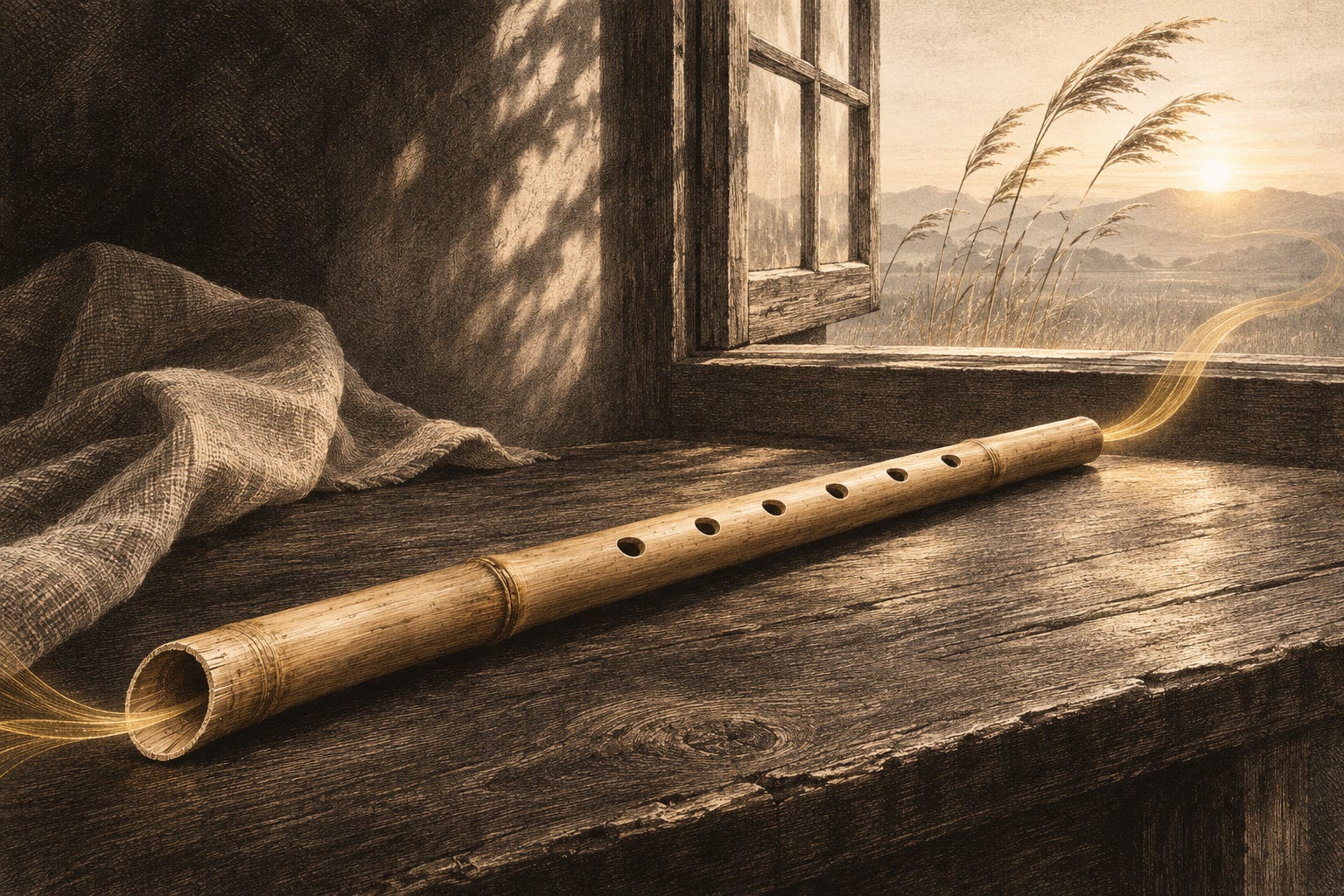
Rumi begins his Masnavi with the lament of a reed flute, separated from its home10. Breath passes through the reed and gives voice to its longing. And I think that there is something profoundly human in this, the desire to give expression to what we feel, to allow another person to know what is within us. We can have so much to say and still struggle to say it.
An apology is a powerful example. We may have known for years that we owe somebody an apology, and the other person may have been waiting all that time to hear it. And at some point we need to have the courage to express what we really feel, honestly, lovingly, gently, but to express it. We need to allow the other person to hear us. The words are given breath, and something which has been held within us for so long finally becomes part of the relationship between us.
So when we explore breathing, I want room for all of this. For the fighter and his teacher, for the yogi, for the person praying, for the musician, for the words with which we tell somebody that we love them. We are exploring the life that finds expression through the body, and the possibilities that become available when we pay attention to it.
Bring your attention to your breathing for a moment. Let it come easily. Give your attention to what you are doing, and if your mind strays, do not worry about it. Simply bring it back to full awareness of the breath. We can practise that, just as we practise becoming fully engaged with anything else which matters to us.
“For self is a sea boundless and measureless,” wrote Gibran11.
Everything important to us is worth the time, the passion, the creativity, the effort, the persistence to explore it. Our health, our relationships, our work, our spiritual lives all deserve that attention. You try things, some things do not work, you continue to look, you continue to seek out, you continue to experiment. You keep going because it is something you believe is valuable, because it is something you love. And that requires us to change. That change is one of the greatest powers of human nature.
Seventy-five minutes passed while Rickson was breathing and moving. He opened his eyes to find his teacher waiting. It is an image I want to leave with you as we begin: a man whose training had brought him into an unfamiliar experience of himself. And a teacher who had helped make it possible.
On Monday, we continue with The Breath Before the Storm. I want to take this into practice, looking at specific ways of breathing and how we can prepare ourselves for the moments which ask the most of us.
Rickson Gracie Academy (n.d.-b) ‘The key lesson Rickson tried to teach the Hulk’. Available at: Rickson and the Hulk (Accessed: 19 November 2026).
Instituto Orlando Cani (n.d.) ‘O Criador’. Available at: Orlando Cani’s biography (Accessed: 19 November 2026).; Rickson Gracie Academy (n.d.-a) ‘Orlando Cani’s influence on Rickson’s career’, part 1. Available at: Orlando Cani’s influence (Accessed: 19 November 2026).
Gracie, R. (2021) Interview with Jocko Willink and Echo Charles, ‘293: Rickson Gracie. “You Do a Good Job Staying Calm in Bad Positions. That Is an Important Thing.” Jiu Jitsu is Life’, Jocko Podcast, 4 August, 01:12:58–01:14:44. Available at: Episode 293. Transcript access (Accessed: 19 November 2026).
Sivananda, S. (2000 [1935]) The Science of Pranayama. World Wide Web edition. Shivanandanagar: Divine Life Society. Available at: The Science of Pranayama (Accessed: 19 November 2026).
Lama Zopa Rinpoche (n.d.) ‘18. Exceptional Gurus, Exceptional Disciples’, in The Heart of the Path. Edited by Ailsa Cameron. Lama Yeshe Wisdom Archive. Available at: Chapter 18 (Accessed: 19 November 2026).
Kozhevnikov, M., Elliott, J., Shephard, J. and Gramann, K. (2013) ‘Neurocognitive and somatic components of temperature increases during g-tummo meditation: legend and reality’, PLoS ONE, 8(3), e58244. doi:10.1371/journal.pone.0058244.
Yilmaz Balban, M., Neri, E., Kogon, M.M., Weed, L., Nouriani, B., Jo, B., Holl, G., Zeitzer, J.M., Spiegel, D. and Huberman, A.D. (2023) ‘Brief structured respiration practices enhance mood and reduce physiological arousal’, Cell Reports Medicine, 4(1), 100895. doi:10.1016/j.xcrm.2022.100895.
Biblica (2011) Holy Bible, New International Version. Matthew 6:19–21. Reproduced by Bible Gateway. Available at: Matthew 6:19–21 (Accessed: 19 November 2026).
Orthodox Church in America (n.d.) ‘The Jesus Prayer’, The Orthodox Faith, Volume IV: Spirituality. Available at: The Jesus Prayer (Accessed: 19 November 2026).
Rumi, J. (1898) Masnavi i Ma’navi: The Spiritual Couplets of Maulána Jalálu-’d-Dín Muhammad Rúmí. 2nd edn. Translated and abridged by E.H. Whinfield. London: Kegan Paul, Trench, Trübner. Book I, prologue. Passage reproduced at: The reed-flute prologue (Accessed: 19 November 2026).
Gibran, K. (1923) ‘On Self-Knowledge’, in The Prophet. New York: Alfred A. Knopf. Reproduced by the Academy of American Poets. Available at: On Self-Knowledge (Accessed: 19 November 2026).